Showing posts with label Women Who Travel. Show all posts

Tuesday, March 31, 2026

Eating the Season: Spring Arrives in Alsace

You notice it first at the market.

Not in a dramatic way. Nothing announces itself. It almost feels like you've imagined it. But something has changed. The stalls feel lighter. The colors are different. What filled the tables all winter begins to thin out, and in its place, something more delicate starts to appear. Spring does not arrive all at once here. It comes in quietly, and if you are not paying attention, it can pass you by just as easily.

For months, everything leaned toward keeping and sustaining. Cabbage stacked high. Potatoes in every form. Onions, apples, preserved foods that carried people through the colder stretch of the year. Meals that held weight, that stayed with you.

Now, the weight begins to lift.

You arrive in mid-March already knowing what you’re waiting for.

At the market, you start looking for it without even thinking. Rhubarb. Strawberries. The first signs that things are about to change. You make your compote when they finally appear, knowing you’ll freeze some of it, trying to hold onto the season just a little longer than it allows.

And then there is the asparagus. You wait for it with a kind of impatience. Because you know how this goes. It arrives, takes over everything, and then disappears just as quickly. By the time it’s gone, everyone is a little tired of it. Ready to move on. Ready to wait a full year before wanting it again. But in that first moment, when it shows up at the market, it’s different. It brings a kind of excitement that’s hard to explain if you haven’t experienced it.

White asparagus, especially, takes over without asking. It fills market tables, appears on every menu, and brings back the same conversation each year.

How do you eat it? With hollandaise, for some. Vinaigrette, for others. Many quietly choose mayonnaise and stand by it. No one is trying to win the argument.  It is just what feels right.  And somehow, that quiet disagreement becomes part of the season itself.

Pâques and the Turn

Easter sits right in the middle of all of this.

You see it first in the bakeries. Lammeles line the windows, dusted with sugar, unchanged from one year to the next. They do not try to be anything new. They just return, right on time.

Eggs find their place back at the table. Lamb becomes the center of the meal for many families.

But more than tradition, it is the shift in atmosphere that stands out. Meals feel less heavy. More open. There is space again, on the table and in the pace of things.

Our Pâques meal always includes asparagus. It’s something I look forward to. Not just for the food itself, but for everything around it.

It’s usually our first meal outside after winter has held its grip on the region for months. Sitting at the table feels different again. Lighter. Easier. Like something has opened.

Not long after, fruit tarts and salads begin to take over. Meals shift without effort into something fresher, something that matches the longer days.

Pâques, for me, has never really been about the traditional holiday.  It marks something else. The return of sunlight,  evenings that stretch just a little longer, meals outside, and the quiet beginning of festival season. It’s the moment where everything starts to come back to life, and you realize you’re stepping into it too.

What It Feels Like to Eat This Way

There is a difference between eating something because it is always available and eating something because it has just arrived.

Here, that difference is hard to ignore.

What you see at the market changes week to week. Not dramatically, but enough that you begin to notice what is new without needing to think about it.

A plate of asparagus asks for your attention. Strawberries feel specific, not just another piece of fruit. Even the simplest ingredients carry a sense of timing.  It is not about making better choices. It is about being aware of where you are in the year.

A Different Kind of Relationship to Food

Eating this way follows the rhythm of the land instead of pushing against it.

It supports the people growing the food, the markets that depend on it, and the slower systems that still exist here. It also means less distance between where something is grown and where it is eaten. Less time spent stored, transported, or forced out of season.

And your body feels that, even if you are not thinking about it in those terms.

After months of heavier, preserved foods, the shift into something fresh and more alive is not just enjoyable. It feels natural. Like something you were always meant to return to.

But beyond all of that, it changes your relationship to food in a quieter way.  You begin to expect less constancy. To wait for things. To recognize their return.  And in doing that, you also learn to let them go.  Not everything is meant to be available all the time.

A Season That Moves On

Spring here is defined by how quickly it passes.

Strawberries disappear almost as soon as you get used to them. Asparagus has a clear end. Rhubarb gives way to what comes next.  Nothing stays as long as you want it to.

Around Pâques, you can feel the overlap. Winter has not fully left, but it no longer dominates. Spring has arrived, but it is still unfolding. For a brief moment, both exist together.  

And then, without much warning, the season moves on. Without really deciding to, you just find yourself moving with it.

Thursday, November 13, 2025

Saying Goodbye to Strasbourg Again

I didn’t plan to write anything tonight, but this is what came out while wandering the streets and thinking about the end of another chapter here. It isn’t polished. It isn’t edited. It’s just honest.

I wish I didn’t have to leave Strasbourg again. This city has become a mirror, a teacher, and a kind of home. It has shown me who I am and who I am allowed to be. It taught me to be brave. It taught me to embrace alone time without fear. It helped me let go of the expectations society placed on me and lean into my passions without guilt. I arrived feeling uncertain and often alone. I now move through the city with a sense of belonging and acceptance that I didn’t know was possible.

Here I learned that presence is enough. That life doesn’t need to be chased or rushed. That uncertainty isn’t something to fear but something to live within. Strasbourg taught me to follow what calls me today and trust that it is enough. 

One of the strangest and most beautiful things is how often strangers stop me in the street. It rarely happens in France, yet it happens to me almost daily. People tell me I have a friendly face or a welcoming aura. I never heard things like that back home. It made me realize that it is okay to enjoy simply being alive. That giving every bit of myself to work is not what creates a meaningful life. Happiness comes from culture, connection, rhythm, and the quiet magic of everyday life. Here each step feels intentional. Each day feels like a beginning.

Strasbourg awakened parts of me I didn’t know were asleep. The emphasis on art and culture made me feel part of something bigger. I learned how much I love the slow life and how deeply I care about the earth. I learned that it is possible to live gently without being criticized for it. I discovered new hobbies and felt encouraged to try everything. I became less afraid of the world. I tried foods I would have refused five years ago. I learned how my choices shape the spaces around me.

This place taught me that the path I never walked is still there, waiting. It taught me how to integrate into a culture while still being the outsider, and how that outsider status can feel okay, even welcomed. It taught me the importance of communication and how powerful it can be. It taught me that mistakes are part of being human and that avoiding them only limits your life. It taught me the value of community, respect, presence, and the removal of distractions.

It may sound like a broken record every six months, but Strasbourg gave me the breath I was missing. Before, I felt suffocated. Here, I found room to breathe again.

Maybe the magic comes from its history as a free Roman city. Maybe it comes from its international character and its place in the European Union. Maybe it comes from its long struggle between two nations and its repeated loss of identity. Whatever the reason, this city has shaped me in a way no other place has. The lessons I’ve learned here feel singular. Irreplaceable.

As I reflect on my time here, I realize that my own duality mirrors the duality of this city. I want to be independent, yet part of something greater. I want freedom, yet community. I want movement, yet belonging. Here, those desires make sense. Here, they are encouraged.

There is a quiet magic in Strasbourg. A magic that helped me breathe, helped me soften, helped me come back to myself. I don’t know if I could have found it anywhere else. At least not like this.

Leaving never gets easier. But every time I go, I take more of this city with me. Thank you, Strasbourg, for the lessons, the people, the quiet moments, and the breath I didn’t know I needed.


Thursday, November 6, 2025

Letters Along the Road

Four letters written from the road, to the voices that taught me how to live, question, and begin again.

To Montaigne,

I think you would understand this restlessness. You wrote to study yourself, to observe what it means to be human. I find myself doing the same, though I am less certain of what I am searching for. Perhaps it is not truth but tenderness, the willingness to sit with questions that never resolve. You said, “Que sais-je?” What do I know? Some days, not much at all. But in the act of asking, I feel alive.

Walking alone through Alsace, I often think of your tower and your essays written among books and silence. My silence is made of footsteps, of distant church bells, of the quiet between languages. You searched within to understand the world. I seem to search the world to understand myself. Perhaps it is the same thing.

To Camus,

I read you beneath a grey Alsatian sky, the vineyards stripped bare after harvest. You wrote that life is absurd, that we must imagine Sisyphus happy. I wonder if happiness is too big a word. Maybe it is enough simply to be awake. Some mornings I sit by the river and feel the absurdity you spoke of, this beautiful world that promises nothing. Yet I am still drawn to it, still wanting to praise it.

You found rebellion in living fully, even knowing that everything passes. I think of that often. I do not want to conquer meaning, only to honor the moment I am in. There is defiance in gentleness, in choosing to keep the heart open even when it hurts.

To Simone de Beauvoir,

You taught that freedom means nothing if it is not shared. I hold on to that. Guiding others through France, I watch them awaken to the world, to themselves, and I see how travel becomes a mirror for freedom. It reminds us that we belong not to one place but to one another.

You wrote with courage and clarity, but also with tenderness. I want to live that way. I want to be strong without closing, to love without losing myself. There is still so much I am unlearning.


To Simone Veil,

Yours is the voice that humbles me most. You carried dignity through horror and still chose life, compassion, and service. When I visited the memorials in Alsace, I thought of you. You never surrendered your faith in humanity, even when the world gave you every reason to.

I often wonder what courage really means. You showed that it can be quiet. It can mean simply continuing, holding onto decency when it would be easier to harden. I am still learning what that looks like in my own life.

And to all of you,

You have been companions on this long road. You remind me that meaning is not a destination but a practice, something shaped in how we live, love, and bear witness. I am still learning to be at peace with not knowing. Perhaps that is the truest beginning.

Travel keeps bringing me back to the same questions: how to live, how to love, how to remain soft in a world that is often unkind. These questions follow me from one place to another, yet they no longer demand answers. I have begun to see that meaning hides in the ordinary, in footsteps through damp leaves and the breath drawn before a new word in a foreign tongue. It is in the simple things, the weight of light on water, the scent of rain on old stone, that I remember why I chose to begin again.

Perhaps all I am meant to do is observe, the sky changing, the heart softening, the moment passing. The more I read you, the more I understand that the search for meaning is really the search for gentleness within ourselves, and that gentleness, once found, is what makes this life feel like home.

Tuesday, September 9, 2025

French Festivals You’ve Never Heard Of (But Should Experience)

France is a land of celebrations. Some are world famous, like Bastille Day in Paris or the Cannes Film Festival. Yet the heart of French culture beats strongest in the smaller, regional festivals that rarely make it onto international travel itineraries. These gatherings reveal traditions that have shaped communities for centuries, and they invite you to witness France not as a tourist, but as a guest welcomed into the rhythm of local life.

Here are ten festivals across France that carry the spirit of authenticity, from village apple presses to medieval parades.

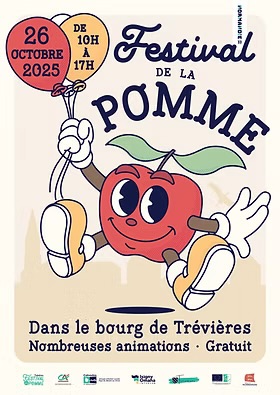
1. Trévières Apple Festival – Normandy

In the small town of Trévières, the apple harvest is celebrated each October with pressing demonstrations, cider tastings, and stalls filled with regional products. It is not a spectacle for tourists but a moment of community pride. This festival captures the essence of rural Normandy, where food, tradition, and gathering intertwine.


2. Festival Médiéval – Bouliac (Nouvelle-Aquitaine)

Bouliac’s medieval festival feels like stepping into a village from centuries past. Costumed locals, crafts, and market stalls recreate a scene that is intimate and immersive. Far from the polished tourist shows, it is a celebration that belongs to the town itself, where visitors are welcome but not the focus.


3. Fêtes de Jaufré Rudel – Blaye (Nouvelle-Aquitaine)

Blaye honors its troubadour prince, Jaufré Rudel, with medieval music, poetry, and pageantry. This is not a festival that draws crowds from across France, but rather one that belongs to the locals who keep the memory of their poet alive. It is literature, music, and history woven into the streets of a riverside town.


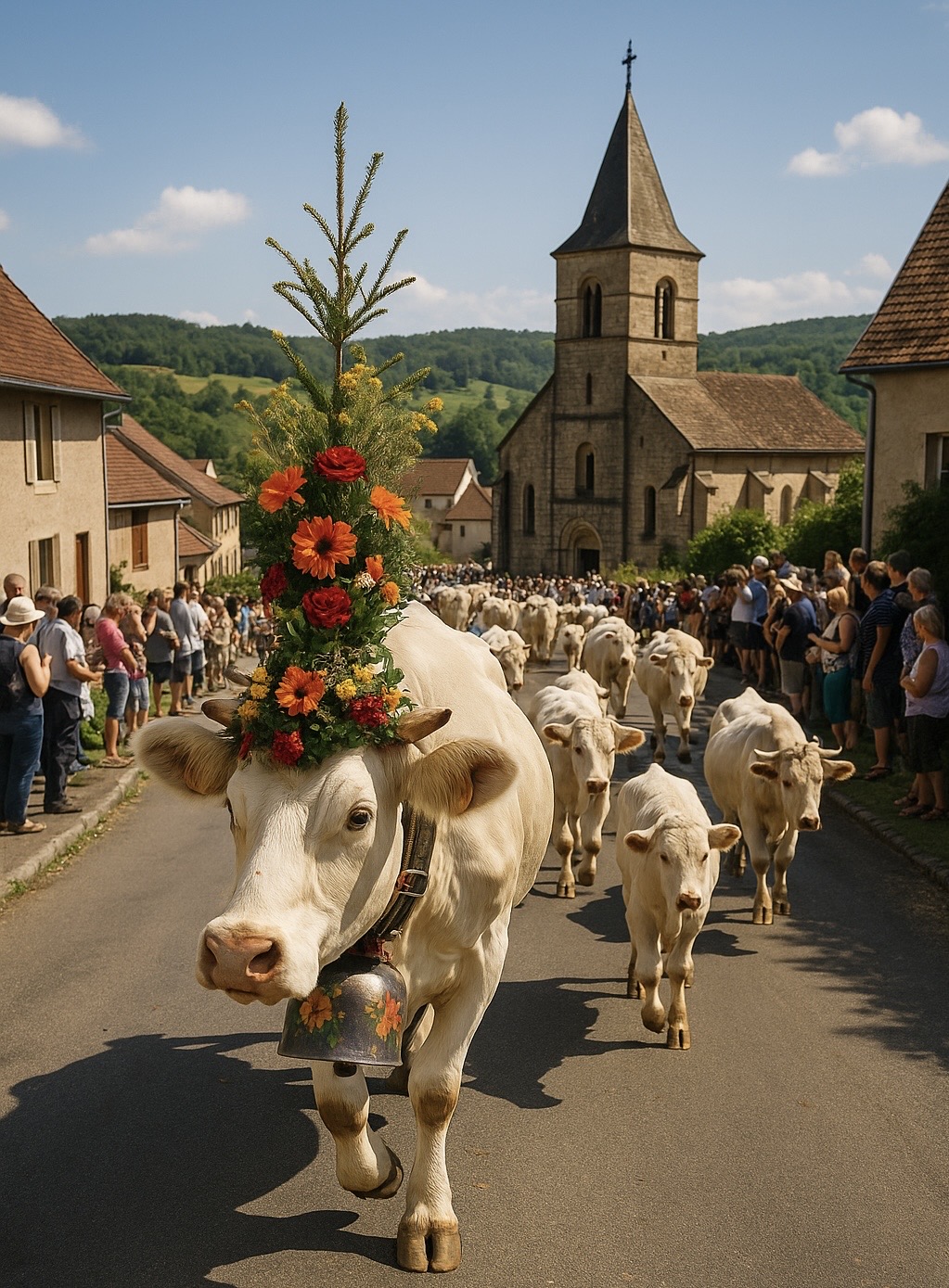
4. Transhumance Festivals – Jura Mountains (Franche-Comté)

Each spring and autumn, herds of cows decorated with bells and flowers are led through Jura villages as they move to and from their high pastures. These transhumance celebrations are as old as the mountains themselves, rooted in the cycles of land and life. They are not staged for visitors but arise naturally from rural tradition. For travelers seeking authenticity, few moments feel as timeless.


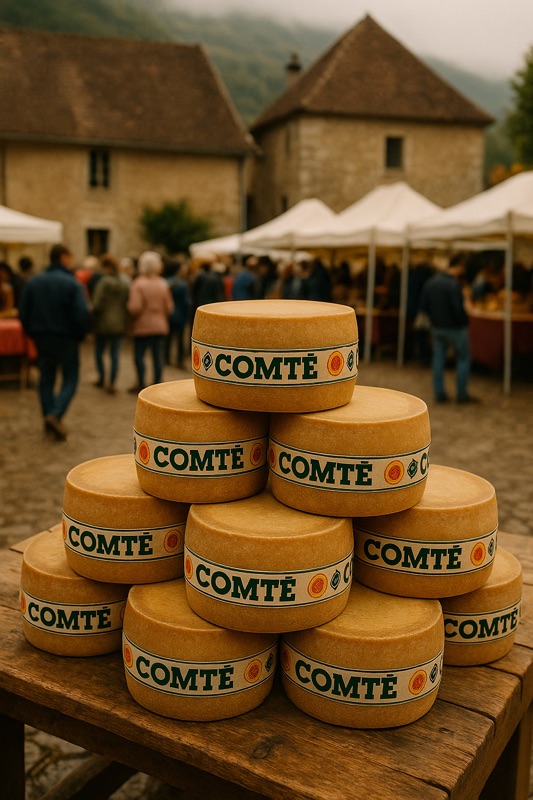
5. Fête du Comté – Poligny (Jura)

Poligny, the capital of Comté cheese, gathers producers, cheesemakers, and locals each September to celebrate this cornerstone of Jura gastronomy. While it is better known regionally, it has not yet turned into a crowded spectacle. Visitors will find themselves in the heart of a cheese-loving community proud to share their heritage.


6. Fête du Fromage – Savoie (Auvergne-Rhône-Alpes)

In Savoie, cheese is more than food, it is identity. The Fête du Fromage brings producers together for tastings, competitions, and markets. This one is known among French food enthusiasts and mountain travelers, so expect larger crowds than some of the other festivals on this list. Still, it remains rooted in its alpine traditions and offers a chance to connect directly with the culture of terroir.


7. Grand Pardon – Chaumont (Haute-Marne)

I had the privilege of experiencing this one myself. The Grand Pardon in Chaumont is a centuries-old Catholic procession that honors Saint John the Baptist. It is deeply spiritual, with processions winding through the streets and locals gathering in reverence. While little known to outsiders, it holds great meaning for the community. To witness it is to glimpse the soul of France’s living faith traditions.


8. Festival des Forêts – Compiègne (Hauts-de-France)

Music drifts through the forest in Compiègne each summer during the Festival des Forêts. Concerts take place among the trees, where classical and contemporary works meet the silence of nature. It is not a large festival, and it is better known within French cultural circles than among international travelers. For those who seek a blend of art, nature, and reflection, it offers something quietly profound.

9. Pfifferdaj – Ribeauvillé (Alsace)

The oldest medieval festival in Alsace, dating back to 1390, Pfifferdaj transforms Ribeauvillé into a living tableau of history. Thousands gather to see pipers, costumed performers, and parades. This one is well known across Alsace and draws significant crowds, but it remains tied to the region’s medieval heritage rather than commercial tourism. It is worth experiencing at least once for the way it connects modern Alsatians to their past.


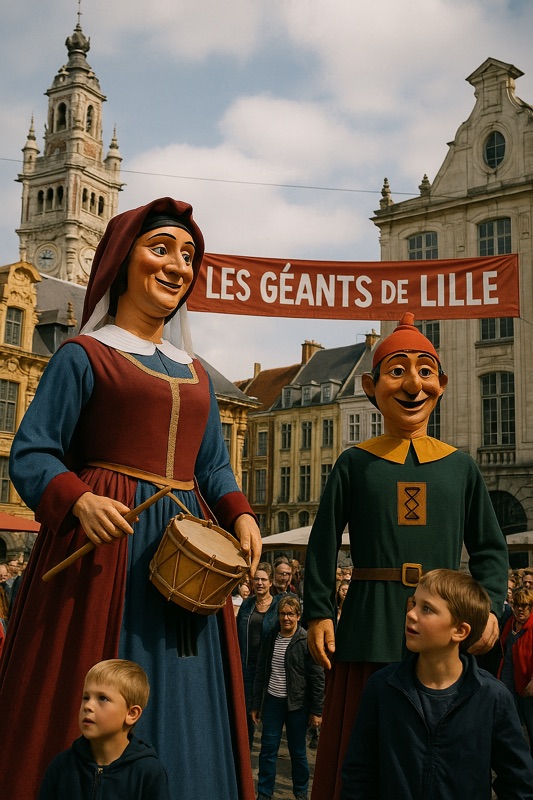
10. Les Géants – Lille (Hauts-de-France)

Towering papier-mâché giants parade through the streets of Lille, a tradition recognized by UNESCO as intangible cultural heritage. This festival is famous in northern France and increasingly recognized beyond, but it is still very much a celebration by and for the people of Lille. The giants tell stories of community, folklore, and memory, and to see them march is to feel the weight of history carried with joy.


France does not reveal itself only through its monuments or museums. It reveals itself in these festivals, where community, tradition, and joy gather in streets, fields, and forests. Some are tiny, known only to villagers, while others have grown into regional spectacles. Together they offer a map to the authentic heart of France.

For those who wish to travel deeply and meaningfully, following these festivals is a way to join in the living culture of a nation that celebrates not just its past, but its enduring spirit.

Sunday, August 17, 2025

Fondremand: A Memory Sealed in Stone


I didn’t expect to remember Fondremand.

It was only meant to be the first stop, a small village on the way to somewhere bigger and more important. I was a student on my very first study abroad trip, groggy from the flight and too jet-lagged to hold much expectation. But the moment we arrived, something shifted.

It wasn’t loud. It wasn’t dramatic. It was just… old. The kind of old I had never touched before. The kind that sinks into the ground and doesn’t need to announce itself.

I had never seen a castle in person. Never stood near Roman ruins. Never walked through a place made entirely of stone, where centuries whispered from every wall. The houses, the lavoir, the way the water slipped quietly through the village—it felt like I was standing in a place that had been lived in for hundreds of years, maybe longer. I remember wondering who had passed through before me. What their lives were like. If they were tired too, and if the calmness of this place had wrapped around them the way it suddenly wrapped around me.

What surprised me most was how intact it all was. In the U.S., things rarely last. We build for function, not for memory. But in Fondremand, the buildings stood not only as relics, but as living parts of daily life. Doors still opened, chairs were still being set out for lunch, and the stone walls still held warmth from the sun. It was quiet, yes—but not abandoned. 

The village itself barely made a sound. Just the trickle of water moving through the creek, soft birdsong, the occasional thud of wooden shutters, and the scrape of a chair dragged onto a terrace as someone prepared the only café that seemed to exist. My feet brushed against loose stones as I walked, the sound grounding me even more than the view. No one rushed. No one filled the silence.

The colors were muted, almost shy, until you reached the grassy areas by the creek where green burst through the gray. Near the water, moss clung thick and slick along the base of the stone ramparts. I remember the sensation of age—not as decay, but as texture. As presence.

There isn’t a castle in Fondremand, not really. Not the kind with battlements and flags and fairy tale endings. But somehow, walking through the narrow lanes and overgrown stones, it felt like I had stepped inside ancient castle grounds. The kind of place where hooves once echoed in the courtyard and gossip slipped between the stones.

And maybe it was the jet lag, or just my overly caffeinated imagination, but I had this vivid moment where my mind wandered to Monty Python and the Holy Grail. I pictured the British on one side of the ramparts, the French on the other, shouting nonsense and launching cows over the wall. I had to stop myself from laughing out loud. It was absurd. And somehow perfect.

Because that’s what Fondremand did to me. It cracked me open. Gave me silence, yes, but also space to be fully there. To wonder. To daydream. To fall into history and absurdity all at once.

I hadn’t expected anything from Fondremand. I never knew it existed. In fact, I hadn’t even known we were going there. I was just along for the ride, following the flow of whatever came next. And maybe that’s why it hit me so deeply. I didn’t have time to brace for wonder. It just arrived, and I happened to be paying attention.

If Fondremand challenged me in any way, it was in what it did after. I went back home and looked at life differently. The rows of identical houses, the monotony of beige suburbs, the way everything in the States felt temporary or disposable—I noticed it all. And I mourned something I hadn’t even realized I’d found.

Because Fondremand had shown me something lasting. Something that had endured, not because of its fame or function, but because it had never stopped being real. It wasn’t preserved for tourists. It was simply lived in—weathered, mossy, crumbling, alive.

I never lived there. I never stayed the night. I didn’t even know the name of the woman who opened her shutters while I passed by. But something happened in that village. And for all its silence, it’s never stopped echoing in me.

Fondremand wasn’t a destination. It was a beginning.

A quiet corner of the world that cracked open my curiosity and offered me my first glimpse of time layered into place. I didn’t capture it in perfect photos. I didn’t even know to look for it. But it found me anyway, through stone and water and birdsong.

More than a decade later, I still carry Fondremand with me. It didn’t try to impress. There were no grand gestures, no curated charm. It simply offered what it had always been—still, weathered, and quietly alive. And maybe that’s why I’d bring people there now. Not to check something off a list, but to offer them that same deep breath of history, quiet, and wonder. A reminder that the moments that shape us don’t always ask permission. They arrive gently, almost unnoticed, and stay long after.


Thursday, May 8, 2025

Not Just Politics: The Quiet Grief of an American Abroad

A Seat at the Table: Bearing Witness at the European Parliament

I wasn’t expecting to feel so much.

It was supposed to be a simple afternoon—an exciting one, no doubt, but still, just a glimpse into the workings of the European Parliament. As someone with a background in political science and a life steeped in travel, being granted access to a live debate session felt like the kind of moment you note quietly in your memory, file under “professional wins,” and carry on.

But then I sat down and listened.

The session was focused on retaliatory tariffs against the United States. More specifically, in response to decisions made by a political figure I won’t name here—because, much like Voldemort, his name feels like a platform, and I’d rather not give him one.

And suddenly, it was no longer just an academic moment. It was personal. My heart rate quickened. My hands trembled slightly. I realized, in real time, that I was watching some of the world’s most influential voices debate the global fallout of my home country’s actions. It wasn’t hypothetical. It wasn’t distant. It was here, now, and deeply real.

The Weight of the Mirror 

It’s a strange thing to feel so disconnected from a place, and yet so affected by how it’s perceived. I’ve spent the past few years intentionally putting space between myself and the United States—not just physically, but emotionally, philosophically. I’ve done the inner work, questioned my allegiance, unpacked my privilege. I’ve learned to speak about the U.S. from a place of nuance, not nationalism.

But watching that debate, I wasn’t prepared for how it would feel to hear my country laid bare in such stark terms. I agreed with the criticisms—I’ve voiced them myself countless times. But hearing them echoed in this grand chamber by people with the power to act on them… it was like watching your house catch fire, from outside the window, knowing your family is still inside.

The proposed measures made sense. Still, I wondered how they would ripple. How would they touch the people I love? How would they impact me, even if I’m only briefly returning? There was no clean answer. Only the heaviness of being caught between identities—branded by the place you came from, even when your heart has found home elsewhere.

A Global Reckoning

There was an eerie familiarity to it all. As the speakers raised their voices—not in anger, but in solemn urgency—I couldn’t help but feel like I was watching history repeat itself. A debate before the storm. An attempt to reason with rising authoritarianism. It felt like the kind of moment we read about decades later, wondering how people missed the signs. Only this time, I was in the room.

And I kept thinking about the duality that defines my life now. I live in a space between worlds: American by passport, global by practice. I’m always translating—language, culture, intention, implication. And in moments like this, the weight of that responsibility feels especially heavy.

What Will My Travelers Feel? 

Soon, I’ll be guiding students and travelers through these same halls. They’ll sit in these seats. They’ll look down at the same chamber floor where I watched the debate unfold. And I wonder—will they feel it?

Will they understand the privilege of being here, in this moment in time? Will they grasp the power of seeing themselves reflected in the eyes of the world—not through headlines or echo chambers, but through dialogue, diplomacy, and consequence?

I don’t want them to come here just to check a box. I want them to listen. To question. To let their perspectives stretch, even uncomfortably. Maybe they’ll leave changed. Maybe they’ll begin to understand what it means to be both of a place and beyond it.

Carrying the Echo

This experience has stayed with me in a way I didn’t expect. It reminded me why I left. But it also reminded me of what I carry. I’m not running from something—I’m running toward something. Toward understanding, connection, responsibility. Toward the hope that we can still shape the future by showing up fully, even when the path feels uncertain.

I left the parliament building that day without any answers. But with a renewed sense of why I do this work. Why I write. Why I guide. Why I believe in the power of bearing witness—even when it’s uncomfortable, especially then.

Because the truth is, silence writes its own story. And I’d rather speak—even if my voice shakes.

Monday, April 21, 2025

Laïcité: What It Is, What It Isn’t, and Why It Surprised Me

Being in France has taught me many things—how to slow down, how to savor a moment, how to pronounce rillettes without embarrassing myself—but one of the deeper cultural lessons I’m still wrapping my head around is laïcité.

At first glance, laïcité might seem like France’s version of the American separation of church and state. And sure, in theory, they’re cousins. But in practice, they couldn’t be more different.

In the U.S., we often talk about “freedom of religion”—the right to practice any faith, or none at all. But religion still lives loudly in public life. It's printed on our money, echoed in campaign speeches, woven into our court proceedings. In many places, it’s not unusual for prayer to open a school board meeting or for politicians to wear their faith like a badge.

France, on the other hand, leans more toward what you might call freedom from religion—at least in public life. That doesn’t mean you can’t believe. Quite the opposite. In France, you're completely free to follow any religion you choose—or to follow none at all. What’s different is that no religion can be imposed on you, especially in spaces run by the state. Public life is meant to be completely neutral—a space where everyone can show up as just a citizen, without any religious marker taking center stage.

It’s not anti-religion. It’s anti-imposition.

That distinction runs deep. In French public schools, for example, students and teachers are not allowed to wear visible religious symbols. It’s not just Muslim students who can’t wear a hijab. Christian students can’t wear a big cross. Jewish students can’t wear a yarmulke. The goal—at least in theory—is to protect the shared civic space from religious pressure, influence, or division. The public sphere, in this sense, is treated as a common good that must remain unmarked by belief.

This applies beyond schools, too. In France, when public officials take office, there’s no swearing in on a Bible—or on any religious text. It’s a civil ceremony, a civic commitment, not a religious one. The same goes for courtrooms. Witnesses are asked to swear to tell the truth, but not on a holy book. There’s no “so help me God” at the end of the oath. The idea is that justice, like governance, must remain secular—accessible and fair for everyone, regardless of belief.

And yet, France remains a deeply cultural place—and that includes religion. Many of the national holidays are rooted in the Catholic calendar: Christmas, Easter Monday, Ascension, All Saints’ Day. They’re observed nationwide, regardless of whether you’re practicing Catholicism, another religion, or none at all. The irony isn’t lost on anyone: the country that guards its secularism so fiercely still gives you time off for saints' days.

But maybe that’s just France in a nutshell—contradictory, layered, complex. A place where tradition and modernity constantly collide and rearrange themselves.

It’s also one of the reasons I find it so fascinating to live here.

France is home to the largest populations of both Jews and Muslims in Europe. And while laïcité aims to keep religion out of the public sphere, that hasn’t erased the deep cultural presence of these communities. For someone like me, who’s curious about the way belief shapes identity, history, and daily life, it’s actually created a beautiful space to explore. I’ve found myself learning more about Jewish traditions, listening to Muslim calls to prayer in certain neighborhoods, and having conversations with people who practice quietly, privately, but with profound conviction.

And here’s a small but memorable example of the culture clash I’ve felt: in the U.S., or even when traveling abroad with Americans, people will often bow their heads and pray aloud before a meal—at home, at restaurants, anywhere—without really checking if everyone at the table is comfortable with that. It’s assumed. Expected, even. I’ve always felt a little uneasy in those moments, as if someone else’s belief system is being draped over the entire table. But the first time that happened here in France—when a group of visiting Americans bowed their heads and prayed out loud at a restaurant—I nearly died of discomfort. Not just for myself, but for the people around us. For the waiter, who paused awkwardly. For the French diners, who visibly tensed. In that moment, I understood viscerally how different the relationship between religion and public space is here. It’s not about suppressing belief. It’s about protecting a shared social space where no one belief dominates or assumes itself as the default.

Another thing I’ve noticed: there’s no culture of evangelism here. No one approaches you on the street to ask if you’ve found salvation. No one strikes up casual conversation with the intent of steering it toward their religion. That kind of thing would be considered wildly inappropriate in France. It’s not because people aren’t spiritual—but because belief is seen as deeply personal, and no one has the right to impose theirs on someone else.

Coming from the U.S., where these encounters are almost normalized—especially in certain regions or subcultures—it’s honestly a relief. There’s a quiet respect here for each person’s internal world. You’re not expected to defend it, explain it, or share it. You’re just allowed to have it. Or not. And that permission, that privacy, creates space for curiosity. For growth. For personal, meaningful exploration that isn’t entangled in performance or persuasion.

I’ll admit, it took me a while to understand this approach. As someone raised in a culture that often celebrates pluralism by displaying it—where interfaith dialogue is on public display, and religion in politics is almost expected—France’s quiet, almost stoic neutrality felt strange at first. But it comes from a deep-rooted history: centuries of religious wars, monarchy-church entanglement, revolution, and eventually, a collective decision that peace required a clean line between faith and the Republic.

Laïcité isn’t always easy to apply. And it hasn’t always been applied fairly. But its intention, at least in its purest form, is equality. One rule for everyone. The state doesn’t care what god you worship, or if you worship at all. But when you step into a government space, a classroom, or a courtroom, you leave religion at the door—not because it’s shameful, but because it’s personal.

There’s something oddly freeing about that. Because in a place where belief isn’t constantly debated or politicized, you get to explore it on your own terms. Quietly. Freely.

Of course, neither the French nor the American approach is perfect. They both come with challenges. But living between these two worlds has made me realize that freedom can look very different depending on where you stand. And maybe that’s okay.

Maybe the most important thing is that we each remain free to question, to believe, to doubt, and to grow—and that no one gets to decide that path for us.

Sunday, January 12, 2025

Owning My Place: Trusting Myself to Lead

 Owning My Journey: The Transformation of an Expert

When I left the U.S., I didn’t know what I was walking toward, but I knew what I was leaving behind: a version of myself that often doubted her value. The past year has been a transformative journey, not only geographically but within my own identity. Developing my blog and sharing my photography has opened a door I never knew existed—the door to vulnerability. I’ve learned that through vulnerability, I’ve been able to connect authentically, not only with others but with myself.

Trusting Myself: The Journey of Becoming an Expert


Travel has always been my greatest teacher. In the past, I thought my value as a guide was in how well I could follow a script—hitting the expected landmarks, ticking boxes for others to show them the France they thought they wanted to see. But stepping away from the familiar, immersing myself in my passions, and embracing my perspective has allowed me to see travel in an entirely new light.

It’s in the trust I’ve started to see from my clients that I feel the most gratitude. A family who came to me expecting a typical city tour of Paris ended up exploring rural villages, learning how to bake treats with a local family, and sitting down for a communal farm-to-table meal with neighbors eager to share stories. A solo traveler with a list of “must-see” sights found themselves volunteering in a vineyard, dining with a family excited to share their farming traditions, and connecting with locals in ways they never expected.

These moments, where travelers go from tourists to participants, have validated my belief in the kind of travel I want to guide. It’s not about crafting the perfect itinerary; it’s about creating room for serendipity, for human connection, and for the beauty of the unexpected.

Owning My Expertise 

I used to shy away from calling myself an “expert,” fearing it sounded pretentious or self-important. But as Montaigne once wrote, “The greatest thing in the world is to know how to belong to oneself.” Over the past decade, I’ve come to understand that owning my experiences—my failures, my growth, my unique perspective—isn’t arrogance; it’s authenticity. Like Montaigne, I see life as a journey of discovery, shaped by the wisdom we accumulate through observation, reflection, and connection.

Being an expert isn’t just about knowing a place; it’s about understanding how to bridge the gap between a traveler and the soul of a destination. It’s in crafting experiences that go beyond the surface, where tourists become participants in local life, where a meal becomes a story, and where a quiet village becomes a portal to understanding. This philosophy of immersion mirrors Montaigne’s ethos—an insistence on seeking depth, finding meaning, and embracing the messy beauty of discovery.

Recently, a traveler approached me with dreams of visiting Paris, captivated by the allure of all things French. I smiled and replied, ‘Paris is lovely, but it’s not France. I can show you Paris, and then I can show you France.

Paris is a city of undeniable beauty and complexity—a world within a world. It’s a place where languages intertwine, where French blends with Arabic, English, and countless other tongues. The city is shaped by the ebb and flow of global influences, a tapestry woven with threads of colonial history, migration, and international exchange. Parisians may not like to admit it, but much of what makes Paris so vibrant comes from far beyond France’s borders.

You’ll stand before Napoleon’s grand arches and columns while savoring flavors inspired by North Africa or the Middle East, enjoying dishes that feel quintessentially Parisian but aren’t traditionally French. In the same afternoon, you’ll wander through lush green parks nestled beside bustling train stations, a mix of serene escape and urban chaos. And when you visit the city’s famed museums, you’ll be in awe of the art and artifacts—but they often tell a broader story. Paris’s grandeur has been enriched by colonial history, with treasures and exhibits from Egypt, Baghdad, and beyond.

That’s Paris: a city of contrasts, a microcosm of the world, an international stage. It’s enchanting, but it’s only one piece of France. To truly understand the country, you have to step outside Paris and into the rolling landscapes of the terroir, where the traditions of small towns and villages speak a quieter, more intimate language. It’s there you find the heart of France—the farmers who coax life from the soil, the artisans preserving centuries-old crafts, the meals shared not in haste but in reverence for the moment.

Crafting this traveler’s journey was an invitation to explore those contrasts, to embrace Paris for her complexities while also revealing the France that lives beyond her borders. Witnessing their wonder as they discovered both sides of this beautiful country reminded me why I love sharing my authentic vision of travel—one that celebrates the full spectrum of what a place has to offer.

Moving Forward with Gratitude

The trust my clients place in me continues to humble me. Each time someone says, “We trust you,” I feel a sense of responsibility, not just to deliver an experience but to provide something deeper—an understanding of a place, its people, its culture, and the beauty that lives in its corners.

For years, the universe handed me opportunities, but I didn’t always know how to channel them. Now, I see a path forward—one rooted in authenticity, connection, and intention. I don’t just want to guide travelers to famous landmarks; I want to invite them into the quiet moments that make them stop and feel alive.

This past year has taught me to own my story, my skills, and my unique way of seeing the world. For the first time, I’m not afraid to call myself an expert—not because I know everything, but because I’m committed to learning, growing, and creating meaningful experiences. It’s not just travel—it’s transformation.

In 2025, I’m embarking on a new chapter of exploration, one that takes me to the western side of France. This journey feels like a continuation of the authentic connections I’ve built, but also a chance to expand my understanding of this diverse country. While I plan to visit a few iconic sites to appreciate their unique histories, my heart is drawn to the smaller towns and lesser-known places. Among these explorations, I’ll visit regions where my ancestors, like Michel de Montaigne, lived and thrived. Walking in their footsteps, I hope to feel the resonance of their lives and ideas, connecting my personal journey with the lineage of those who came before me. Each step into these untraveled paths feels like both an adventure and a homecoming, a reminder that the soul of travel often lies in the unlikeliest of places.

Monday, December 23, 2024

Home Is Where the Disconnect Is: Lessons After Returning from Strasbourg

The Noise of Returning 

Coming back felt like stepping into a storm I wasn’t prepared for. The world here is so loud—machines hum, conversations blare, and the news never stops. I walked into a grocery store, overwhelmed by shelves brimming with too much, and retreated to the vegetable aisle, hoping to find a quiet corner. Even driving feels foreign now—my hands grip the wheel tighter, my nerves fray. Nothing feels gentle. Nothing feels like home.

One adjustment has been particularly difficult: throwing everything into a single trash bin. In Strasbourg, sorting waste and composting were everyday acts that made sense, a way of living that honored the earth. Here, it feels like regression. Why aren’t we composting food scraps? Why does convenience trump care for the planet? It’s not just about the act of throwing things away—it’s the metaphorical weight of undoing habits that once aligned with my values.

The Ache of Isolation
The hardest part isn’t the noise or the pace; it’s the silence. In France, I was surrounded by connection—friends who checked in daily, strangers who became companions, and moments that made me feel part of something greater. Here, the silence is suffocating. Days pass without messages. Conversations are short and transactional. It’s not that people don’t care, but life here leaves little room for the kind of connection I now crave.

I try walking, hoping to find solace in the familiar, but the few sidewalks that exist lead me nowhere. I sit with my thoughts, but they press down heavily, filling the quiet with echoes of disconnection. How do you belong to a place that no longer fits the shape of who you’ve become?


Gratitude Amid the Noise 

And yet, even here, there are moments of calm that anchor me. Time with my grandmother has been a gift—her laughter, her stories, the way she reminds me of what matters most. I’ve watched the leaves change, their colors painting the days with beauty I can’t ignore. Gratitude whispers to me in these moments, reminding me that even in discomfort, there is something to hold onto.

But gratitude doesn’t erase the ache. It doesn’t quiet the questions that swirl in my mind late at night: How do I move forward here? How do I bridge the gap between who I was and who I’ve become?

The Weight of the World
Election season has cast a shadow over everything, a relentless cycle of impending doom that fills every screen, every conversation. I left the U.S. to escape the storm, but it followed me. Election night left me wearing a heart monitor, the stress carving its way into my body. Now, being back, the air feels heavier. It’s not just the politics—it’s the unspoken weight of knowing I don’t belong. Here, I have to temper myself, hiding parts of who I am to navigate a world that feels increasingly hostile. It’s a kind of exile, even in the place I once called home.

Questions Without Answers
Strasbourg gave me a mantra: live every moment. Here, I count the hours until it’s late enough to sleep, just to wake up one day closer to leaving. I know I’ll return to the life that feels right for me, but for now, I’m here, learning to navigate the in-between.

Have you ever felt this dissonance—the ache of returning to a life that no longer fits? How did you find peace in the in-between? I don’t have the answers yet, but perhaps the questions themselves are enough. For now, I’m holding onto the threads of gratitude, trying to weave them into something that feels like home.


Moving Forward 

This weekend, I pulled myself out of the haze, checking tasks off my list, planning ways to explore the city with new eyes. There’s still beauty here, I remind myself, even if it feels harder to find. I’m trying to live with intention again, to reconnect with the lessons I learned abroad.

The journey back has been anything but easy, but it’s a reminder that growth doesn’t end with distance. Sometimes, it’s in the dissonance, in the struggle to reconcile who you were with who you’ve become, that you find the deepest truths.

Saturday, December 7, 2024

A Farewell to Strasbourg: Reflections on a Season of Transformation

The streets of Strasbourg feel different now. As the calendar inches toward my departure, I walk with a kind of reverence, savoring each cobblestone underfoot. The rhythm of the city has imprinted itself on me, becoming a pulse I’ve unconsciously matched over the months. Leaving—even temporarily—feels like loosening the grip on something sacred, something that has quietly shaped me in ways I didn’t know I needed.

This city became my sanctuary. Its riverbanks and cathedral spires were more than just scenery—they were witnesses to my journey. Strasbourg caught me at a time when I was unraveling, and instead of demanding anything from me, it gave me space to rebuild. It let me wander its streets with my thoughts, lose myself in its corners, and find myself in its stillness.

The Spirit of Connection

Strasbourg has a way of bringing people together. It’s in the small moments—the nod from a baker handing you a freshly baked baguette, the smile of a stranger as you pass on the bridge, the casual conversations that lead to something deeper.

This city taught me the value of connection, not through grand gestures but through the quiet consistency of community. My friends here became family, offering support and care that carried me through difficult days. They showed me what it feels like to belong—not through obligation, but through shared time and mutual respect. It’s these bonds, formed in a city that so easily opens its arms, that I will carry with me long after I leave.

A Space for Growth

Strasbourg also offered me solitude, a rare and precious thing. Here, I learned to sit with myself, to examine the parts of me that I’d been too afraid to face. Its quiet mornings gave me clarity, its winding alleys held my secrets, and its golden sunsets reminded me to find beauty even in endings. The city became a mirror, reflecting back not just who I was, but who I could become.

One of my favorite routines was sitting along the river with a book, watching the city come alive in the soft glow of the setting sun. Those moments weren’t just peaceful—they were transformative. They reminded me that healing doesn’t always come in breakthroughs. Sometimes, it’s in the steady rhythm of days, in the comfort of familiarity, and in the courage to keep showing up for yourself.

Gratitude for the Ordinary

As I reflect on my time here, it’s the ordinary moments that stand out. Walking through the Orangerie Park on crisp autumn mornings, sharing meals with friends over laughter and wine, or listening to the echo of the cathedral bells as they called the city to attention. These are the moments that stitched together my time in Strasbourg, creating a tapestry of memories that feel both fleeting and eternal.

I will never forget how this city allowed me to pause and just be. For a traveler who’s always searching for the next adventure, Strasbourg was the one place where I felt at peace staying still. It became more than a destination—it became a home.

Moving Forward

Tomorrow, I’ll say goodbye to Strasbourg, at least for a while. The thought fills me with a bittersweet ache. I know I’ll return, but this chapter, with its quiet beauty and profound lessons, will never come again. Yet, as I prepare to leave, I carry something intangible but powerful: the understanding that even in letting go, there’s growth. Even in leaving, there’s gratitude.

This city has given me a gift that no suitcase can hold—a deeper understanding of myself and the world. Strasbourg will always be here, but the person I’ve become because of it will go forward, seeking the same kind of connection, growth, and peace it so freely gave me. For that, I am forever thankful. 

Sunday, November 24, 2024

Finding My Heart in Alsace: A Journey of Healing and Holiday Joy

 
Full Circle in Alsace: Rediscovering the Magic of the Holidays

A year ago, I walked into the Christmas markets of Alsace as a visitor, unsure of what I would find. I was there for work, not for wonder, yet what unfolded in those cobblestone streets transformed me. From the first scent of mulled wine to the twinkling lights overhead, the warmth of the season reignited something I thought was lost forever: joy. It wasn’t just the markets—it was the feeling of being part of something timeless, something bigger than myself.

The holidays had long been a season of contrast for me. As a child, they were filled with wonder: baking cookies, gazing at Christmas lights, and gathering with family for meals where togetherness was the true gift. But as I grew older, that joy gave way to exhaustion and disconnection. Working during the holidays left me drained, and personal loss turned the season into a reminder of what was missing. Conflict with loved ones made the warmth I craved feel unreachable. By the time November arrived each year, I felt nothing but dread.

Last year, Alsace reminded me of everything I had forgotten. The streets, alive with laughter and song, the smells of roasted chestnuts mingling with the crisp winter air, the sight of children marveling at the lights—all of it wrapped around me like a long-lost memory. I wept as I walked through the markets, overwhelmed by the simple, profound truth that joy was still possible. For the first time in years, the holidays didn’t feel like a reminder of absence—they felt full, alive, and brimming with possibility.

Watching the Magic Unfold

This year, I’ve been privileged to experience the markets in an entirely new way. I arrived early, months before the chalets open and the crowds descend, and witnessed the quiet transformation of a city preparing for magic. I saw workers laughing as they built chalets and hung lights, heard choirs rehearsing in hidden corners, and caught the scent of crepes and vin chaud as vendors prepared their stalls. Snow fell softly as the lights were tested for the first time, illuminating empty streets that would soon be filled with millions of visitors from around the world.

It’s been a quieter kind of magic, but no less meaningful. Watching the markets come to life has mirrored my own transformation. The patience, care, and love that go into creating this celebration feel like the same qualities I’ve worked to nurture in myself over the past year. Like the markets, I’ve been slowly rebuilding, rediscovering, and creating space for joy.

Giving Back and Moving Forward

This year, I’ll be volunteering at the markets, serving soup to visitors and giving back to the community that has given me so much. It feels fitting—almost poetic—to contribute in this way. Last year, the markets gave me back the spirit of the holidays; this year, I hope to share that same spirit with others. Volunteering reminds me of the importance of connection, of being part of something larger than myself. It’s a small act, but one that carries profound meaning for me.

Exploring the markets this time feels different, too. I’m taking the time to savor the details: the handmade crafts, the regional specialties, the eco-friendly and sustainable initiatives that make these markets so unique. Every bite of a seasonal dish, every sip of vin chaud, every conversation with a local artisan feels like a celebration of this region’s incredible spirit. Alsace doesn’t just host the holidays; it embodies them.

A Heart Full of Gratitude

Alsace has been more than a backdrop to my healing journey—it’s been an active participant. This place, with its deep traditions and generous people, has given me the space to become my most authentic self. The older women who’ve shared family recipes, the friends who’ve lifted me during tough moments, the historians who’ve brought the past to life—all of them have shown me what it means to belong, to be supported, and to give kindness freely.

As the markets prepare to open, I find myself filled with the same childlike anticipation I once felt on Christmas Eve. But there’s a bittersweetness, too. My time in Alsace is coming to an end, and with it, this chapter of rediscovery. Still, I leave with a heart full of gratitude. Alsace has reminded me that joy isn’t something we lose forever—it’s something we can rediscover, nurture, and share. It’s a gift that grows when we embrace the traditions that matter, the people who care, and the beauty that surrounds us.

So today, as the lights begin to glow and the first notes of holiday music fill the air, I find myself smiling through tears. The spirit of Alsace is alive in me, and I carry it forward with hope, gratitude, and the knowledge that this place has changed me forever. 

Eating the Season: Spring Arrives in Alsace

You notice it first at the market. Not in a dramatic way. Nothing announces itself. It almost feels like you've imagined it. But somethi...